I teach courses in archaeology, anthropology, research methods, and archaeological data analysis at Arizona State University. My goal is to help students develop both substantive knowledge about the human past and practical skills in research, critical thinking, communication, and data analysis. Many courses incorporate hands-on projects using archaeological data, collections, digital tools, and collaborative research.
Courses Taught at Arizona State University
ASB 335: Ancient Ruins of the Southwest (in person and online)
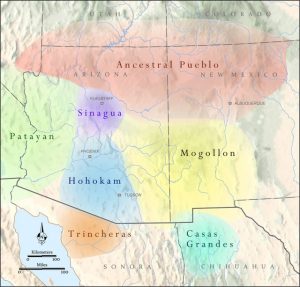
This course is designed to provide an introduction and overview of the archaeology of the US Southwest for all interested students, and to provide majors with essential background and an opportunity to begin working with the professional literature. The course covers the Southwest from the times of the earliest inhabitants (more than 13,500 years ago) until the present and the many successful Indigenous communities in the region today. We focus in particular on developments and cultural fluorescence in areas such as the Mimbres Valley, Chaco Canyon, Mesa Verde, and our own Phoenix Basin. Emphasis is on the process of archaeological investigation and how we know what we know about the past. Students will learn about the history of the region, archaeological analyses and methods, the political and social importance of heritage, and the legal context of archaeological work in the region.
ASB 333: “Mythbusters” Frauds, Myths, and Mysteries in Archaeology
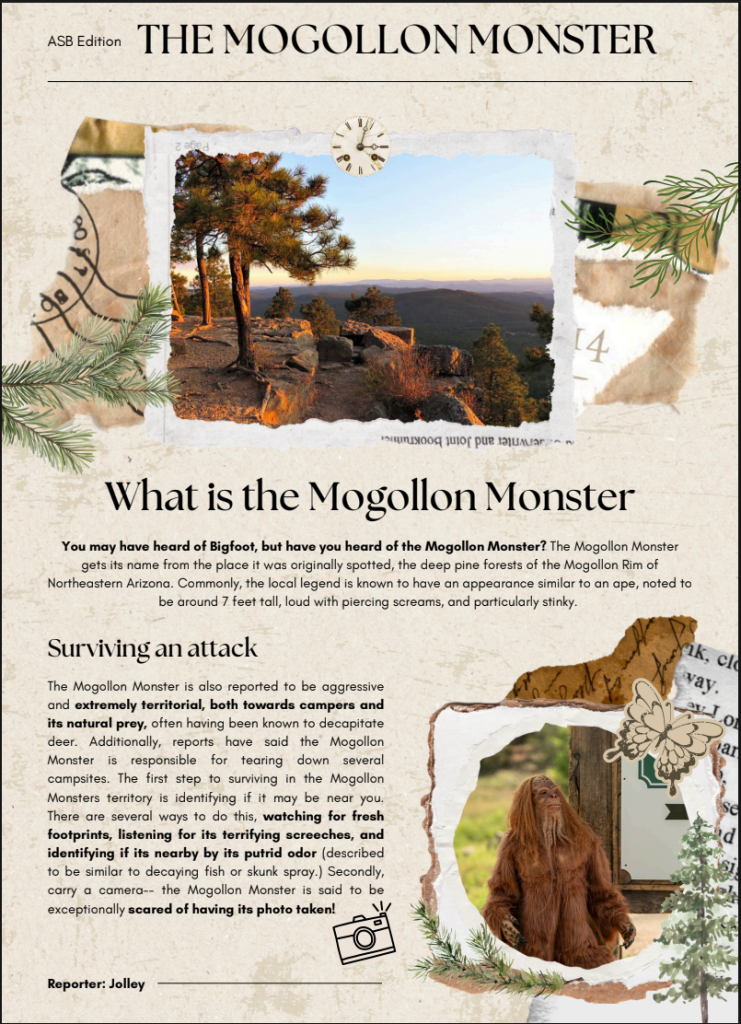
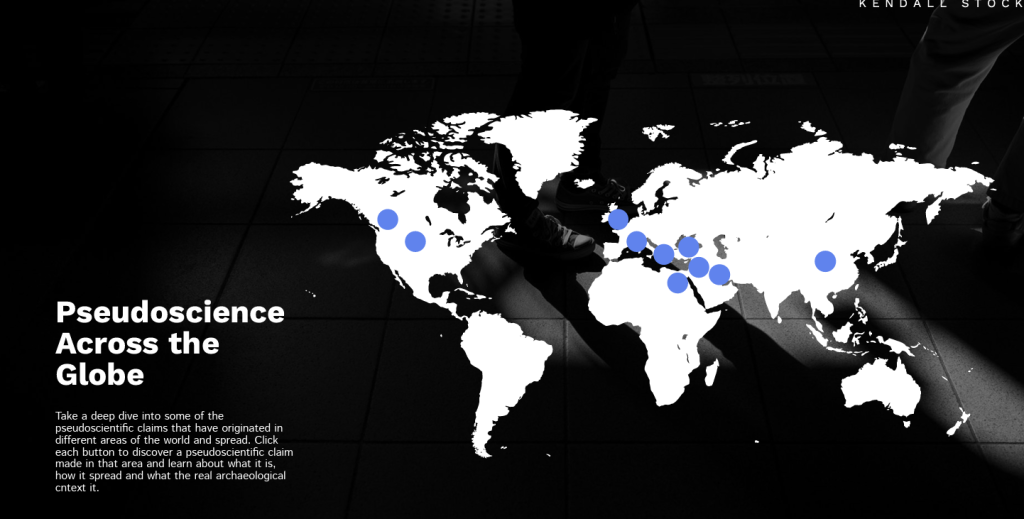
Depictions of archaeology in popular culture are full of dubious tales of ancient extraterrestrials, giants, and widespread scientific conspiracy. In this class we will explore such fantastic claims and learn how archaeologists separate plausible arguments from pseudoscience. We will also critically examine how and why pseudoscientific claims develop and take hold of the public imagination.
ASB 338: Archaeological Field Practicum
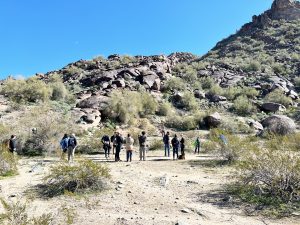
The purpose of this course is to provide you with an introduction to archaeological field research, analysis, consultation, permitting/legal issues, curation, archives, and reporting in the context of relevant legal and ethical frameworks in the United States and Arizona. The course itself will consist of a series of lectures, discussions, workshops, site tours, and field/lab work sessions and presentations designed to give you a broad background in archaeological practice as well as practical knowledge and experience related to cultural resource management and other related careers. The class will include a survey field project working in collaboration with the City of Phoenix at the Pueblo Grande archaeological site. The class will also include an introduction to the process of tribal consultation and the legal and ethical context of conducting archaeological research with Indigenous communities.
ASB 567: Southwestern Archaeology
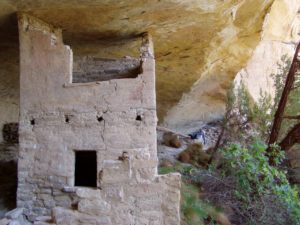 This course is designed to provide a graduate-level introduction and overview of the archaeology of the pre-Hispanic U.S. Southwest/Mexican Northwest as well as an in-depth investigation of several of the most common themes and research topics in the field. This course assumes no prior knowledge of Southwestern archaeology, but it is recommended that students are familiar with archaeological method, theory, and terminology generally. The first part of the semester will be focused on surveying several important cultural developments across time and space, providing both background on general culture history and the research issues that are particularly relevant to those selected times and places. We will focus primarily on the sedentary agricultural occupations of the region. In the second part of the semester we will focus on specific research issues and topics as they have been examined in Southwest archaeology in greater detail.
ASM 565: Quantitative and Formal Methods in Archaeology
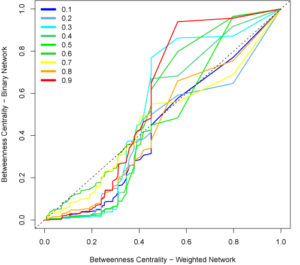
Quantitative and Formal Methods in Archaeology is an intensive introduction to the use and presentation of quantitative methods and formal analysis for archaeological research. In this course, basic to intermediate statistical concepts will be discussed with emphasis on the role of quantitative methods in solving real archaeological problems. The course also projects a philosophy for the quantitative analysis of archaeological data. The course consists of a mix of lectures and hands-on activities using real data. The overarching goal of this course is for students to become both critical readers of arguments relying on quantitative techniques and also for students to learn how to find, use, and present appropriate techniques to address substantive archaeological questions in their own research. This course is as much about the clear presentation of quantitative arguments as it is about the methods themselves. In many cases, simple visuals may be preferable to complex quantitative methods. I hope to help students build an intuition on when and how to use quantitative approaches for different audiences.
ASB 568: Intrasite Research Strategies and Spatial Analysis in Archaeology
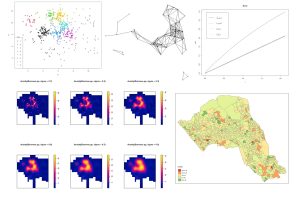 This course is focused on interpretations of and exploratory methods for analyzing spatial and temporal patterns in archaeological and other contexts. We will cover a range of topics relevant for both intra-site analyses and studies at any scale including: distributional analysis, clustering techniques, artifact/feature co-associations, spatial autocorrelation, chronological modelling, spatial networks, and sampling. Each week will typically be divided into seminar discussion of readings illustrating particular methods or frameworks, hands-on work focused on statistical or visualization techniques, and, later in the semester, discussion of analytical issues or problems being faced by participants in the course in their own research.
ASB 591: Social Network Methods and Models in Archaeology
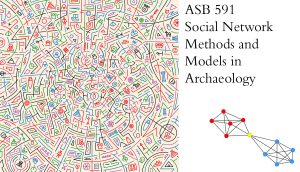 This course is focused on the application of social network methods and models for archaeological data. Network analyses have become somewhat common in archaeology in recent years but many of the most frequently used tools and techniques for building and analyzing networks were designed for considerably different kinds of data and timescales. In this class we will explore the kinds of questions archaeologists are asking and answering using network data and the unique challenges and opportunities posed by the use of archaeological data for network research. We will further focus on building strong arguments linking archaeological data to network concepts and models as well as on how archaeologists might contribute to broader debates in the world of network science. The course has both a lecture/discussion component as well as a lab component where we will work through a range of network analyses using real archaeological data. Labs will be completed primarily using R but I assume no previous experience in that platform.
Honors Contracts
Barrett Honors Contracts provide an opportunity to go beyond the standard requirements of a course by exploring a topic in greater depth through an independent project. Rather than assigning a single type of honors project, I work with students to develop a project that aligns with their interests, skills, and academic goals while engaging meaningfully with course content. These projects often involve hands-on experimentation, original research, creative work, public scholarship, or other forms of active learning that allow students to apply what they are learning in class in a new and challenging way.
Past projects have taken many different forms. For example:
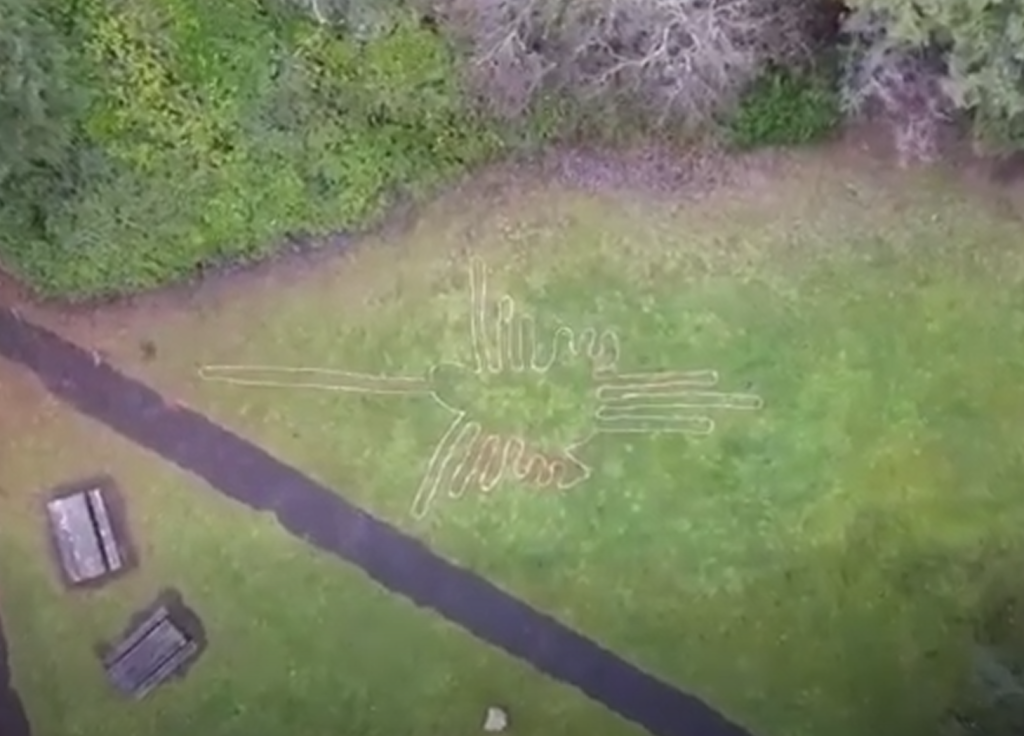
- A student interested in experimental archaeology researched how the Nazca Lines may have been created and then constructed a quarter-scale version in a local park to test the process.
- A hobbyist metalworker designed and built a copper saw to investigate claims about ancient stone-working techniques and successfully cut through a piece of granite.
- A student artist recreated alleged “dinosaur and human” figurines used in pseudoscientific claims and demonstrated why the artifacts could not have aged in the way proponents suggested.
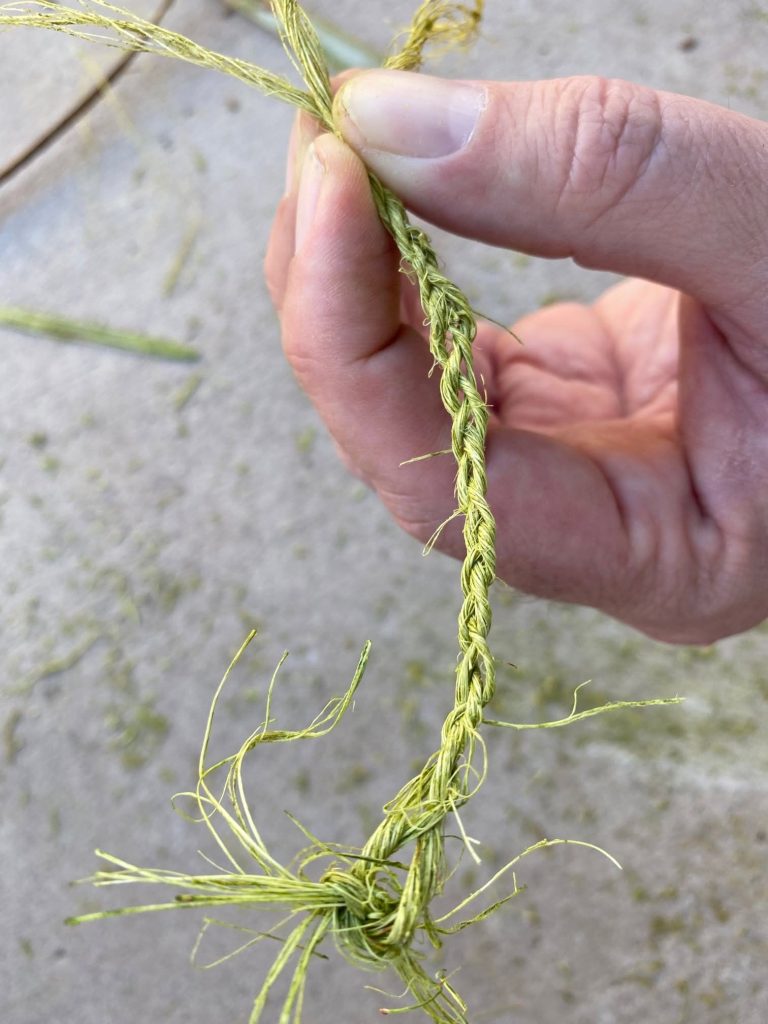
- A student interested in traditional technologies crafted a bone fishhook modeled on archaeological examples from the Southwest and successfully caught a fish with it.
- Several students have contributed to public-facing projects, including expanding archaeological content on Wikipedia and creating educational resources based on course topics.
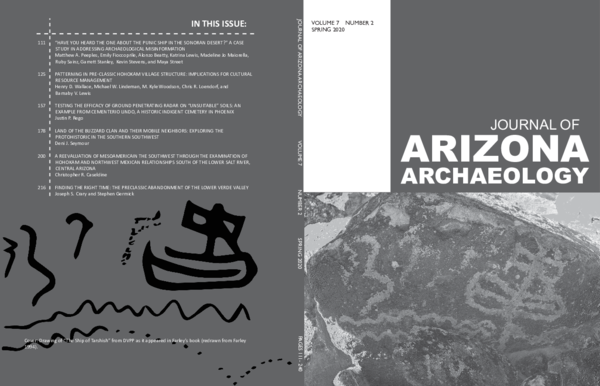
In some cases, honors contracts have grown into larger collaborative research efforts. One group of students worked with me to investigate claims regarding a purported Punic inscription in the Phoenix area. The project ultimately resulted in a peer-reviewed publication in the Journal of Arizona Archaeology. While publication is never the expectation, these experiences illustrate how honors projects can sometimes develop into meaningful contributions to archaeological research and public scholarship.
Click here for more information about options and expectations.