Advancing the Scale of Ceramic Compositional Analysis
Project Overview
This project uses chemical analyses of ancient ceramics to investigate patterns of production, exchange, and social interaction across the U.S. Southwest. By creating a standardized database of more than 30,000 ceramic samples and applying new artificial intelligence, machine learning, and social network methods, researchers are uncovering how people and communities were connected across large regions over time.

Jeffrey Ferguson
University of Missouri

Donna Glowacki
University of Notre Dame
Matthew Peeples
Arizona State University
Robert Bischoff
Arizona State University
Project Details
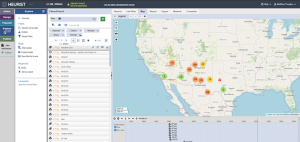
Research on ceramic production and exchange has substantially advanced archaeological understandings of social, economic, and political organization in past societies, while also offering broader insights into long-term human interaction and connectivity. A major component of this work has involved chemical compositional analysis of ceramics using neutron activation analysis (NAA), with the American Southwest representing one of the most intensively studied regions worldwide. Existing NAA datasets reflect decades of substantial research investment, yet the collective analytical potential of these data remains underutilized for two primary reasons: (1) existing databases have not been fully synthesized or standardized across projects, and (2) methodological approaches capable of systematically analyzing compositional data at macroregional scales remain underdeveloped. This project addresses these limitations by creating a standardized, expanded, and broadly accessible database of more than 30,000 ceramic compositional analyses, enabling new large-scale analytical approaches, including applications of artificial intelligence and machine learning. The resulting database infrastructure will be maintained and made readily available to support a wide range of future archaeological research.
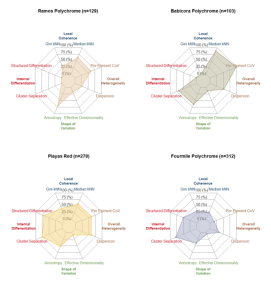
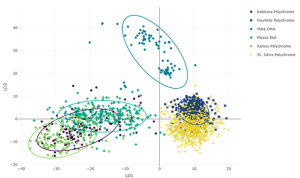
Recent advances in artificial intelligence and machine learning provide new opportunities for exploring large, multivariate archaeological datasets at scales appropriate for investigating regional interaction systems. This project develops new analytical methods that integrate NAA compositional data with social network analysis (SNA) approaches, allowing researchers to evaluate models derived from social network theory alongside established interpretations based on ceramic typology and exchange studies. Moving Southwestern NAA research beyond narrowly focused site- or project-level studies toward regionally integrated analyses will improve comparative sampling strategies, increase the interpretive value of smaller datasets, and reduce unnecessary duplication of analytical effort. The methodological framework developed through this project is also broadly applicable to other world regions with comparable archaeometric databases.
Research Team
- Jeffrey Ferguson, University of Missouri
- Donna Glowacki, University of Notre Dame
- Matthew Peeples, Arizona State University
- Robert Bischoff, Arizona State University
- Tuesday Critz, Arizona State University
- Mary Ownby, Ownby Analytical
Project Funding
2025 National Science Foundation, Archaeology Program – Advancing the Scale of Ceramic Compositional Analysis
Outcomes
2026 Peeples, Matthew A., Kelsey Hanson, and Maren Hopkins. From Clay to Community: Learning through Taskscapes and Social Networks in the World of Juan Quezada. Paper presented at the Society for American Archaeology Meeting, San Francisco, CA.
2026 Ferguson, Jeffrey, James Davenport, Matthew Pailes, and Matthew Peeples. Compositional Comparison of Contemporary Mata Ortiz and Ancient Casas Grandes Pottery and Implications for Production. Paper presented at the Society for American Archaeology Meeting, San Francisco, CA.